How to Transfer an Out-of-State License to NJ
Moving to New Jersey means more than changing your address: you also need to make sure your driver license is transferred correctly. The process depends on whether your current license is valid, what documents you can prove your identity and residence with, and whether you want a standard license or REAL ID. Here’s how to prepare for the New Jersey Motor Vehicle Commission (MVC) visit and avoid common delays.
Who needs to transfer a license to New Jersey
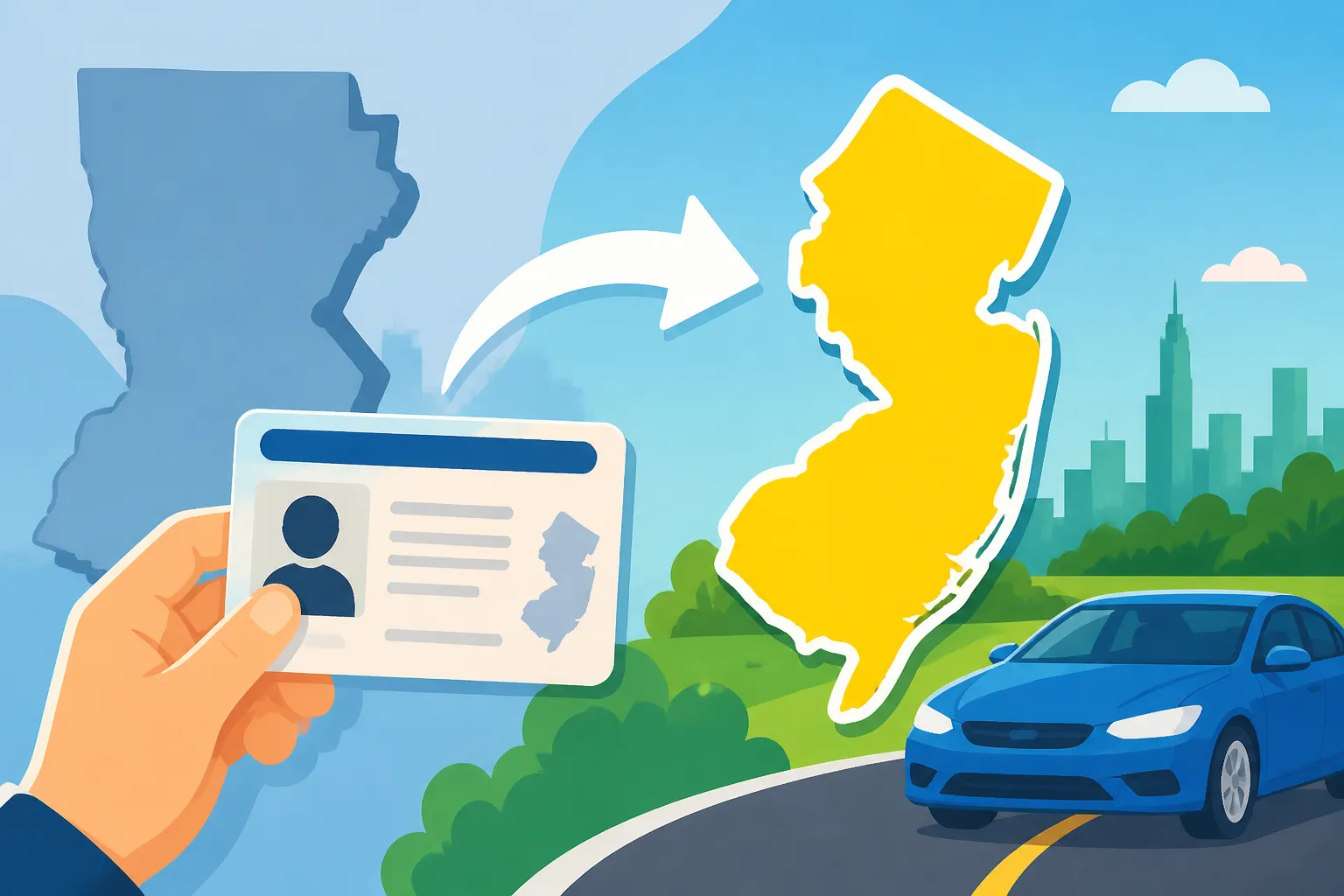
If you establish New Jersey residency and hold a driver license from another U.S. state or jurisdiction, you will generally need to transfer it to a New Jersey license. The MVC sets a deadline for new residents to complete the transfer; confirm the current rule and how it applies to your circumstances with the MVC rather than assuming your old state’s license can remain your only credential indefinitely.
The transfer is a licensing transaction, not just an address update. Changing an address with your former state does not give you a New Jersey license, and changing your address with the MVC does not, by itself, produce a new card. If you already have an NJ credential and only moved within the state, see Moving Within New Jersey: Must You Order a New Physical License?.
Your situation may call for a different process if:
- Your out-of-state license is expired, suspended, revoked, or otherwise not in good standing.
- You no longer have the physical license card.
- Your current credential is a learner permit or probationary license rather than a full license.
- Your license was issued by another country or territory.
- You are transferring a commercial driver license, motorcycle credential, or another endorsement.
- You are applying for REAL ID at the same time.
A U.S. state-to-state transfer is not necessarily the same as applying for a first license. If your credential is valid and you meet the MVC’s transfer requirements, you may be able to transfer without repeating the regular knowledge and road tests. That does not mean every applicant is automatically exempt from every screening or test. The MVC determines what is required based on your license, driving record, and situation.
If you have never held a full license, or you have a permit instead, the graduated licensing and testing rules may be different. Start with Moving to New Jersey: Transferring vs. First-Time Drivers to sort out which path fits your credential.
A move is different from a temporary visit
A short visit to New Jersey does not automatically mean you must transfer your license. The relevant issue is whether you have become a New Jersey resident, not simply whether you are temporarily staying in the state. People who move for work, school, family, or a permanent change of home should check the MVC’s current residency and transfer rules promptly.
A move may also trigger separate vehicle responsibilities. License transfer, vehicle title, registration, insurance, and inspection are related parts of relocating, but one does not automatically complete the others. If you brought a car, see Moving to New Jersey: Transferring Your Vehicle Title and Registration and New Jersey’s 60-Day Vehicle Registration Deadline for Movers. Check the MVC’s current requirements for each transaction.
Valid, expired, and missing licenses
The condition of your out-of-state credential matters. A valid license is usually the most straightforward starting point. An expired license may have different eligibility rules, and a suspension or revocation can create a hold or prevent a simple transfer. Do not assume that paying a fee or showing an old card will resolve a status problem.
If the license has expired, read Transferring an Expired Out-of-State License to New Jersey before scheduling. If the card was lost, ask the MVC what evidence it accepts to verify your prior license and driving history; an abstract or other official record may be relevant. A missing card does not necessarily mean you must start from zero, but the MVC needs enough information to establish what you previously held and whether you qualify.
What to check before booking
Before arranging a licensing-center visit, establish exactly what type of credential you have and whether it is eligible for transfer. This reduces the chance of booking the wrong service or arriving without a required document.
Review these details:
- Issuing jurisdiction: Identify the state or jurisdiction that issued your license. If it was issued outside the United States, use the foreign-license process instead of assuming state-transfer rules apply.
- License class: Check whether the credential is a standard passenger license, commercial license, motorcycle license, or a combination.
- Expiration date: Note whether the license is current or expired. If expired, check the separate eligibility rules before proceeding.
- Driving status: Look for any suspension, revocation, restrictions, or unresolved requirements in the issuing jurisdiction. A license card can be in your possession even when your driving privilege has a problem.
- Name and date of birth: Compare the name on the license with your identity documents and any records that establish your current legal name.
- REAL ID choice: Decide whether you want a standard New Jersey license or want to apply for REAL ID during the transfer. The document requirements differ.
- Additional credentials: If you have a motorcycle endorsement or CDL, ask how it will be handled and whether more documentation or testing is needed.
For applicants moving from another state, the MVC’s current instructions are the final word on eligibility. Rules can vary for credentials that are expired, restricted, suspended, or issued under a special status. If your situation is not a routine transfer, verify it before you travel.
Transfer appointments and the correct center
A license transfer is a driver-licensing matter, so make sure you select the appropriate MVC service and location. MVC centers do not all handle the same transactions. The official MVC appointment system and center information can help you confirm what service is available and whether an appointment is required.
For a practical overview of choosing a location, see Which New Jersey MVC Centers Process Out-of-State License Transfers?. If no suitable time appears, How to Find Open Appointment Slots at New Jersey MVC offers scheduling tips. Do not assume that a vehicle center can handle a driver license transfer simply because it is an MVC location.
Use the MVC’s official office locator to find the nearest center and check its current services and hours. Do not rely on an old schedule, an outdated appointment confirmation, or a listing that does not come from the agency. If the MVC says your transaction requires an appointment, follow that instruction; do not count on being served as a walk-in.
When booking, choose the service that matches your actual situation. If you are transferring a standard license, do not reserve a REAL ID-only or unrelated service unless the portal instructs you to do so. If you need a CDL or motorcycle credential, check those requirements separately.
Documents to bring to the MVC
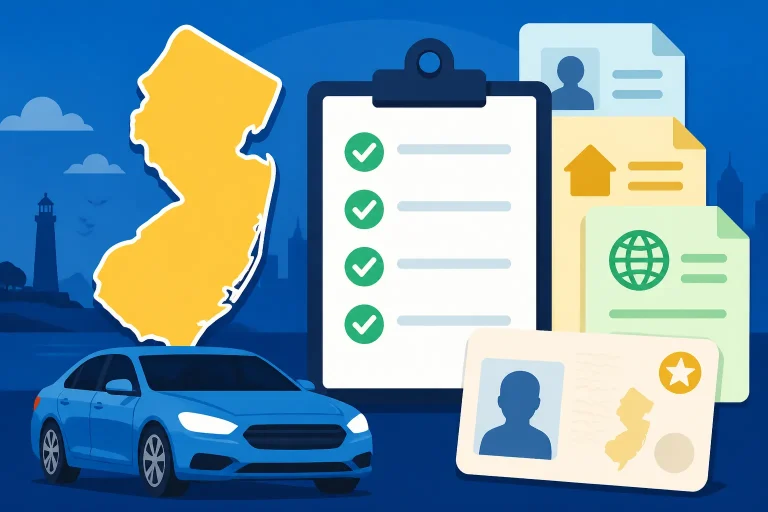
For most applicants, document preparation is the part of the process most likely to cause a second visit. New Jersey uses a point-based identity verification system, and a REAL ID application has additional federal documentation requirements. The exact documents accepted can depend on your transaction, so check the MVC’s current checklist before leaving home.
Identity and date of birth
The MVC requires evidence of identity and date of birth. A current out-of-state license can be an important part of your transfer paperwork, but do not assume it will satisfy every identity-document requirement on its own. Use the MVC’s official list to build the required identity points and confirm that your chosen documents qualify for the categories in which you plan to use them.
The New Jersey system is commonly described as the 6 Points of ID. The points are not a simple count of documents: different documents carry different values, and restrictions apply to how they can be combined. Review Building 6 Points of ID for a New Jersey Credential before assembling your papers.
Bring documents in the form required by the MVC. If its instructions call for original or certified documents, a phone image, photocopy, scan, or digital version may not be accepted. Check any document-specific requirements, including whether a document must be unlaminated, current, or issued by an approved authority.
Proof of New Jersey residence
You will generally need to establish your New Jersey address. Choose a document the MVC currently accepts, and make sure the address is legible and matches the information in your application. Proof of residence may be a separate requirement from identity, even if another document shows an address.
If you have recently moved, the newest bill or account statement may not have arrived yet. Check which alternatives the MVC accepts rather than relying on an informal explanation or a document that is outside its date rules. Using Recent Bank Statements and Utility Bills for NJ Address Proof explains common address-proof options, while Checklist of Required Paperwork for Your NJ MVC Agency Visit can help you organize a broader visit packet.
A mismatch between your application and your papers can create questions. If your name changed, bring the records needed to connect the name on your current documents with the name on your license. For a legal name update, see Legal Name Changes on a New Jersey Driver License: Where to Start.
Social Security number and name records
The MVC may request a Social Security number or other information for electronic verification, depending on the transaction and your eligibility. Follow the agency’s current instructions on what to enter or bring. If you are not eligible for a Social Security number, check what alternative certification or documentation applies to your case rather than leaving that part blank without explanation.
Name differences deserve attention. A marriage, court order, or other legal change may result in different names appearing on your license, identity papers, and Social Security records. The MVC may require documents that explain the sequence of names. If the difference concerns REAL ID documentation, Name Matching Rules Between Social Security and ID for NJ REAL ID may help you identify what to verify.
A practical document checklist
Use this table as a planning aid, then compare it with the MVC’s current checklist for your exact transaction.
| Document or detail | Why it matters | What to check before you go |
|---|---|---|
| Current out-of-state license | Shows the credential you want to transfer | Confirm it is valid and bring the physical card if available |
| Identity documents | Establish identity and help meet MVC verification rules | Check the MVC’s 6 Points categories and document limits |
| Proof of New Jersey address | Establishes your state residence | Confirm the document type, date, and address are acceptable |
| Social Security or applicable alternative information | Supports required verification for your case | Follow the MVC’s instructions for your eligibility |
| Name-change records, if applicable | Connect names that differ across documents | Bring the official records that explain the change |
| CDL or motorcycle records, if applicable | Establishes class and endorsements | Confirm any additional medical, testing, or transfer rules |
| Payment method | Allows you to pay the applicable transaction cost | Check accepted payment methods and current fees with the MVC |
Keep the documents together in a folder and put the items that establish identity, residence, and your existing license where you can reach them. Before the appointment, compare every item with the MVC’s online instructions. If the rules say a document must be an original, do not bring only a photo of it.
What happens during the transfer
The exact sequence depends on the MVC’s current procedures and your credential, but a typical transfer involves checking in for the correct service, submitting the required documents, completing any applicable screening, surrendering the former license when required, and paying the transaction cost.
Check-in and document review
Arrive with enough time to follow the center’s check-in process. Have your appointment information and documents ready, and be prepared for staff to review the details of your existing credential. A booking is not the same as approval: the MVC still needs to confirm eligibility and document requirements at the counter.
If the documents do not meet the requirements, the MVC may not be able to complete the transaction that day. That is why it is worth checking the document rules and appointment details before travelling. For more on preparing for an in-person visit, see Checklist for Preparing Your First In-Person NJ MVC Agency Visit.
Screening and testing
A transfer applicant may need to complete a vision screening. Whether a knowledge exam or road test is required depends on the license and the MVC’s determination. Do not assume that every out-of-state license is automatically exempt from testing, especially if it is expired, restricted, or otherwise unusual.
A current license from another U.S. state may qualify for a different process than a permit, a foreign license, or an expired credential. The MVC may also consider whether the license class and endorsements match what you are requesting in New Jersey. If staff tell you a test is required, ask which test applies and how to schedule it through the official MVC process.
If you are told to take a knowledge exam, prepare with New Jersey driving rules and the MVC’s official study materials. I Drive Safely is one optional source of practice and instruction, but it does not replace the MVC’s official requirements or guarantee that a test will be waived or passed. For an overview of testing, see Vision and Knowledge Testing Steps at New Jersey Licensing Centers.
Surrendering your old license
A New Jersey transfer may require you to surrender your out-of-state license. Do not plan on keeping both cards as active credentials unless the MVC specifically tells you otherwise. The transfer process is designed to establish the New Jersey credential, not to create two current licenses for the same driving privilege.
If you are worried about travel or identification while waiting for the new card, ask the MVC what temporary paperwork it provides and what it can be used for. Do not assume that an old license remains valid after you surrender it or that a receipt functions as a full photo ID. Keep any receipt or temporary document in the manner the MVC directs.
Paying and receiving the credential
The cost depends on the credential and transaction, and it may differ if you request REAL ID or add a class or endorsement. Check the MVC for current amounts and accepted payment methods. Avoid relying on an old fee figure from a saved article, social post, or previous visit.
New Jersey credentials are generally produced and delivered under MVC procedures rather than printed immediately at the counter. Confirm the expected delivery process and what to do if the card does not arrive within the agency’s stated timeframe. Keep your application receipt and any temporary document until the permanent card arrives, while following the limitations printed on the temporary paperwork.
When the card arrives, check your name, address, license class, restrictions, and expiration information. If something appears wrong, contact the MVC promptly through its official channels. Do not wait until renewal to correct an error that affects your driving privileges or identity records.
Standard license or REAL ID
A transfer is a good time to decide whether you need a standard New Jersey license or want to apply for REAL ID. REAL ID is a separate identification standard with additional documentation requirements. It is not required simply to drive, but some people choose it for identification purposes covered by federal rules.
A REAL ID application generally requires documents that establish identity, Social Security information or an applicable alternative, and residence. Your ordinary transfer documents may not be enough. Check the MVC’s current REAL ID checklist before you book or attend, because arriving without the required papers can prevent the upgrade even if the license transfer itself is otherwise possible.
If you choose REAL ID, prepare the document set for that application rather than assuming you can add the star later without another visit. The MVC may require in-person verification. See Upgrading to a New Jersey REAL ID Driver License and Checklist of Required Paperwork for a New Jersey REAL ID for the details to check.
A standard license may be the simpler choice if you do not need the additional credential and would rather avoid gathering the extra REAL ID documents. That choice does not make the license less valid for driving. Compare the uses of the credentials and your travel or identification needs, then confirm current federal and MVC requirements before deciding.
| Your situation | What to consider |
|---|---|
| You need a New Jersey license for driving | A standard license may meet the driving need; confirm the transfer requirements |
| You want an identity credential that meets REAL ID standards | Prepare the additional documents required for REAL ID |
| Your supporting records have different names or addresses | Resolve document mismatches before the visit if possible |
| You are unsure whether a particular document qualifies | Check the MVC’s official REAL ID checklist rather than guessing |
The choice is personal, but the paperwork should be deliberate. If you book a standard transfer and later decide that you also want REAL ID, ask the MVC whether the appointment type and documentation will cover both transactions. Do not assume the upgrade can be added automatically.
Special cases and common delays
Some transfers cannot be handled as a routine exchange. Clarifying the issue before making an appointment can save time and prevent an avoidable trip.
Expired license
If your out-of-state license has expired, do not rely on the standard transfer process without checking the eligibility rules. The permitted pathway may depend on how long it has been expired and the issuing jurisdiction. In some circumstances you may need to pass tests or follow a first-time licensing process. Read Transferring an Expired Out-of-State License to New Jersey and confirm your next step with the MVC.
Suspended or revoked status
A suspension or revocation is different from an expired card. It may mean you are not currently authorized to drive, even if you still possess the physical license. Resolve the status issue with the authority that imposed it and ask the MVC whether any separate New Jersey requirements apply. Do not drive in New Jersey on the assumption that an out-of-state card overrides a suspension.
If a New Jersey hold or suspension is involved, use the relevant MVC process before seeking a new credential. How to Check If Your New Jersey Driver License Is Suspended covers checking New Jersey status, and Resolving New Jersey Driving Suspensions and Fines explains why unresolved items can block licensing transactions.
Lost or unavailable license card
If you cannot present the card, contact the MVC before booking to ask what it accepts to verify the credential. Depending on the circumstances, you may need an official driving record or other documentation from the issuing jurisdiction. The precise document depends on what the MVC can verify and the rules for the transaction.
Avoid relying on a photograph of the card unless the MVC expressly accepts it. If you need a replacement from your former state first, allow time for that process and do not drive unless your driving privilege is valid and you have documentation the law recognizes.
Permit or probationary credential
A learner permit is not interchangeable with a full driver license. New Jersey may require an applicant with an out-of-state permit to follow its graduated driver licensing steps. The permit’s age, restrictions, time held, and record of supervised practice can affect the process.
For a permit transfer, read Transferring an Out-of-State Learner Permit into New Jersey GDL. If you are a teen, do not assume that the rules for adult license transfers apply. New Jersey’s GDL stages include requirements and restrictions that can differ from those in the state where the permit was issued.
Commercial and motorcycle licenses
Commercial driver licenses and motorcycle credentials involve additional classifications and endorsements. A standard out-of-state license transfer does not necessarily transfer every commercial qualification or motorcycle privilege automatically. The MVC may require class-specific documents, medical certification, testing, or other verification.
For a CDL, start with Transferring an Out-of-State Commercial License to NJ and confirm the current medical and eligibility rules. For a motorcycle credential, see Applying for a Standalone Class E Motorcycle License in NJ if your situation involves a separate motorcycle license. Be explicit when booking so the MVC can direct you to the correct transaction.
Foreign licenses
A license issued by another country is not automatically treated like a license from another U.S. state. Foreign-license recognition can depend on factors such as the issuing country, the type and validity of the license, age, and immigration or lawful-presence documentation. Translation and verification rules may also apply.
Use the foreign-license process, not the standard out-of-state transfer instructions. New Jersey Reciprocity Agreements for Foreign Drivers and Foreign Document Rules for New Jersey Driver License Applications can help you identify the issues to verify. The MVC determines whether your license qualifies for reciprocity or whether testing is required.
Name or address mismatch
A difference between the name on your license and the name on your identity documents can delay a transfer. Bring the official records needed to show how the names relate, and check that your New Jersey address is consistent across the documents you plan to use. If the mismatch reflects a recent legal change, resolve the documentation question before the visit when possible.
An online address update is not the same as a new physical card. If you already have a New Jersey license and need a replacement showing your updated address, see Updating Your NJ MVC Address Online: When to Order a Duplicate. For a new resident, the license transfer itself is the step that establishes the New Jersey credential.
A reliable preparation sequence
A simple order of operations can help keep the transfer manageable:
- Confirm that you are using the correct process. Determine whether you hold a full U.S. state license, a permit, a foreign license, CDL, or motorcycle credential.
- Check your license status. Verify its expiration date and confirm that it is not suspended or revoked.
- Choose standard or REAL ID. If you want REAL ID, prepare the additional documents before booking.
- Review the MVC’s current transfer instructions. Confirm the deadline, eligibility, testing rules, required documents, and appointment process.
- Make the appointment for the right service. Check that the chosen center handles the transaction and use the MVC’s official appointment system.
- Prepare original or otherwise acceptable documents. Match each item to the MVC’s current checklist and resolve name or address differences.
- Attend with your out-of-state license and supporting papers. Follow the center’s check-in process and be ready for document review and any required screening.
- Follow the MVC’s instructions after the visit. Keep the receipt or temporary paperwork, watch for the mailed card, and check the card for errors when it arrives.
The most common preventable problems are arriving at the wrong type of center, bringing documents that do not meet the MVC’s rules, assuming an expired or suspended license qualifies for a routine transfer, and expecting a standard license appointment to cover REAL ID or a CDL transaction. A careful review before booking is usually more useful than trying to fix missing paperwork at the counter.
If you are close to the new-resident deadline, do not wait until the last moment to investigate appointment availability. Check the MVC’s current instructions as soon as you establish residency, then book the correct service and gather documents while you wait. Keep in mind that vehicle registration, title transfer, insurance, and inspection may have separate requirements and timelines.
Frequently Asked Questions
Do I have to take a New Jersey road test to transfer my out-of-state license?
Not necessarily. A valid license from another U.S. state may qualify for a transfer without the regular road test, but the MVC decides based on your credential and circumstances. Expired, restricted, or unusual licenses may require additional steps.
Can I keep my old state license after transferring to New Jersey?
The MVC may require you to surrender your out-of-state license during the transfer. Follow the agency’s instructions and do not assume you can keep two active licenses. Ask what temporary documentation is available while your New Jersey card is being produced.
Can I transfer an expired out-of-state license?
Possibly, but an expired credential may follow different rules from a valid one. Eligibility can depend on how long it has been expired and other details. Check Transferring an Expired Out-of-State License to New Jersey and confirm your case with the MVC.
Do I need REAL ID to drive in New Jersey?
REAL ID is not required just to drive. A standard New Jersey driver license can serve as a driving credential. REAL ID has additional document requirements and may be useful for identification purposes covered by federal rules, so check current requirements before choosing.
Is transferring my license enough to register my car in New Jersey?
No. A license transfer and vehicle registration or title transfer are separate transactions with separate requirements. If you brought a vehicle, review Moving to New Jersey: Transferring Your Vehicle Title and Registration and confirm the current MVC process for each step.
Disclaimer
This article is for general informational purposes only and does not constitute professional advice. Laws, prices and regulations vary by location and change over time. Consult a qualified professional for guidance on your specific situation. New Jersey Driver Guide is not a government agency and is not affiliated with any state motor vehicle department.